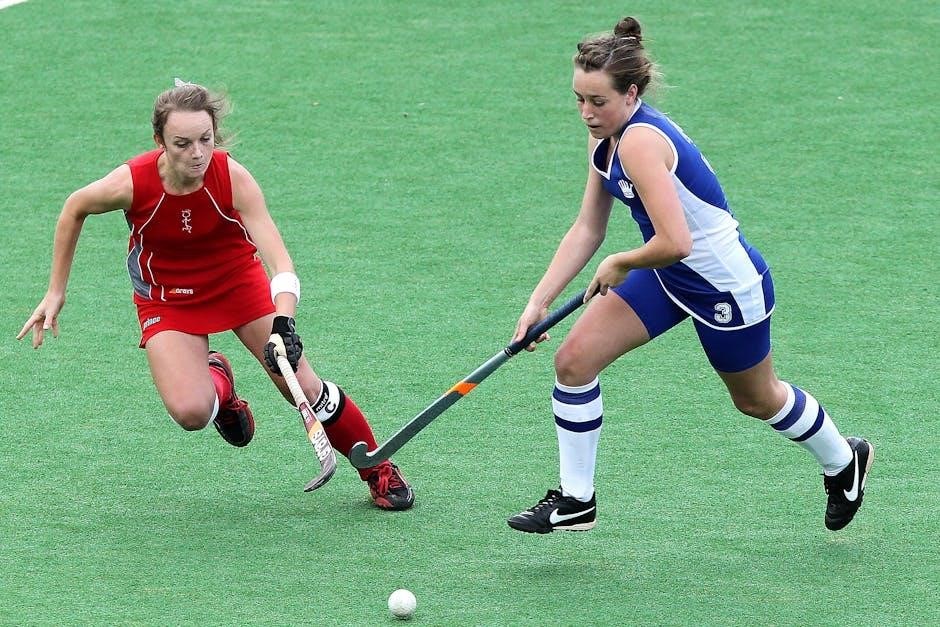
Field Hockey Stick Size Guide: A Comprehensive Overview
Navigating field hockey stick sizing requires understanding length, weight, curve, and grip—crucial for performance and comfort. This guide details how to find the perfect fit, considering player height, skill level, and position.
Proper sizing enhances control, power, and safety, ultimately improving your game. We’ll explore measurement techniques and adjustments for optimal play.
Understanding Stick Length
Stick length is arguably the most critical factor in selecting a field hockey stick, directly impacting a player’s control, reach, and overall performance. It’s not a one-size-fits-all scenario; the ideal length varies based on individual height, playing style, and skill level.
Generally, stick length is measured from the heel of the stick (the bottom) to the top of the curve. Incorrect length can lead to inefficient technique, fatigue, and even injury. A stick that’s too long can be unwieldy and difficult to maneuver, while one that’s too short limits reach and power.
Traditionally, stick lengths were categorized into sizes like 36.5”, 37.5”, and 38.5”, but modern sticks offer more granular sizing options. Understanding the correlation between player height and recommended stick length is a starting point, but it’s essential to consider individual preferences and playing position. For example, defenders often prefer slightly longer sticks for increased reach during tackles, while forwards might opt for shorter sticks for quicker handling.
Proper stick length allows players to maintain a comfortable and balanced stance, promoting efficient ball control and accurate passing.
Factors Influencing Stick Size
Several key factors beyond height dictate the optimal field hockey stick size. Playing position is paramount; forwards typically benefit from shorter sticks for agility and quick hands, while defenders often prefer longer sticks for extended reach and tackling ability. Midfielders often fall somewhere in between, needing a balance of both.
A player’s skill level also plays a significant role. Beginners may find a slightly shorter stick easier to control, while more advanced players might prefer a longer stick to maximize power and reach. Individual playing style – whether focused on dribbling, passing, or shooting – further influences the ideal length.
Physical attributes, such as arm length and torso length, should also be considered. Players with longer arms may comfortably use a slightly longer stick. Furthermore, the type of field surface (grass, turf, or indoor) can subtly affect the preferred stick length, with some players opting for slightly shorter sticks on faster surfaces.

Ultimately, finding the right size is a personalized process that requires careful consideration of all these interconnected factors.
Player Height and Stick Length Correlation
A general correlation exists between player height and appropriate field hockey stick length, serving as a useful starting point for selection. However, it’s crucial to remember this is a guideline, not a rigid rule, as individual factors significantly influence the ideal fit.
Typically, players under 5’0” (152cm) might consider sticks in the 28-30 inch range. Those between 5’0” and 5’3” (152-160cm) often find 30-32 inch sticks suitable. Players ranging from 5’3” to 5’6” (160-168cm) generally use 32-34 inch sticks. For individuals between 5’6” and 5’9” (168-175cm), a 34-36 inch stick is common.
Players exceeding 5’9” (175cm) usually opt for 36-38 inch sticks, and those over 6’0” (183cm) may require 38 inch or longer sticks. These are approximate ranges; adjustments are often necessary based on skill level, playing position, and personal preference.
It’s always recommended to test different lengths to determine what feels most comfortable and allows for optimal control and performance. Relying solely on height can lead to an ill-fitting stick.
Stick Length Measurement Methods
Accurate stick length measurement is vital for optimal performance. Several methods can be employed to determine the correct length, ensuring a comfortable and effective playing experience.
The most common method involves measuring from the top of the stick (the hook) to the ground while wearing your field hockey shoes. Stand upright with the stick held in a standard playing position, and have someone assist with the measurement. The top of the stick should ideally reach somewhere between your hip and your belly button.
Another technique utilizes the ‘hand span’ method. Hold the stick vertically, and place your hand, palm facing forward, under the stick’s head. The distance from the heel of your hand to the bottom of the stick should be approximately one hand span.
Remember to consider your playing style. A more upright stance may necessitate a longer stick, while a more bent-over posture might benefit from a shorter one. Always prioritize comfort and control when determining the ideal length.
The Importance of Inseam Measurement
Inseam measurement is a cornerstone of accurate field hockey stick sizing, providing a crucial data point for determining the appropriate stick length. It’s a more precise method than relying solely on height, as it accounts for individual leg proportions.
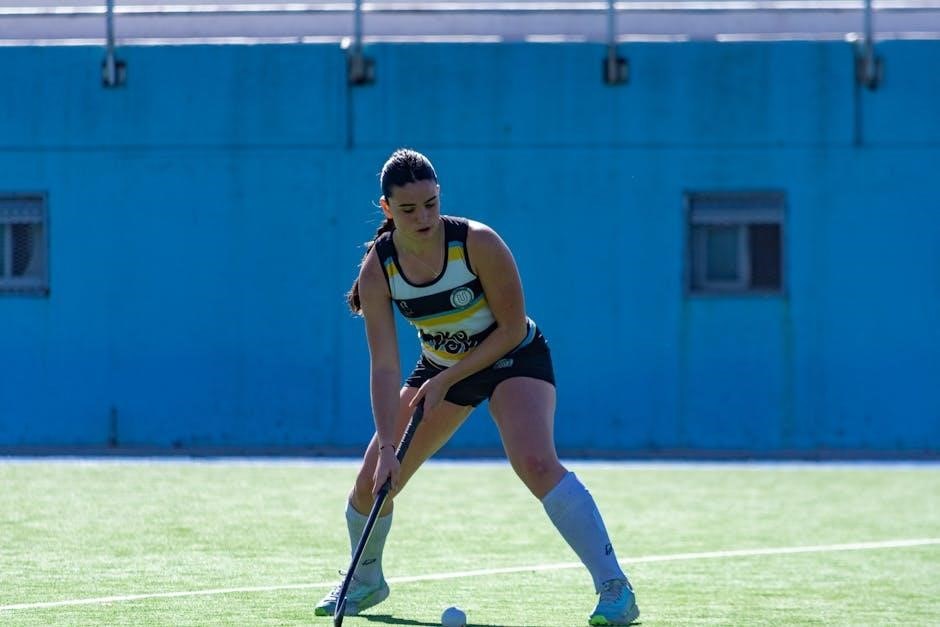
To measure your inseam, stand with your back against a wall, wearing your field hockey shoes. Place a book or flat object between your legs, mimicking a saddle. Measure the distance from the top of the book to the floor – this is your inseam.
This measurement directly correlates to the ideal stick length. Generally, a shorter inseam requires a shorter stick, and vice versa. Manufacturers often provide sizing charts based on inseam measurements, offering a reliable starting point.
Don’t underestimate the impact of a correctly sized stick. An improperly sized stick can lead to poor technique, reduced power, and increased risk of injury. Prioritizing inseam measurement ensures a comfortable and effective playing experience, maximizing your potential on the field.
Youth Stick Sizing
Sizing field hockey sticks for youth players demands careful consideration, as they are still growing and developing their skills. Unlike adult sizing, focusing solely on height isn’t sufficient; age and skill level are equally important factors.
Generally, youth sticks range from 28 to 32 inches, but this is a broad guideline. Younger players (ages 5-8) typically start with a 28-inch stick, progressing to 30 or 32 inches as they grow. Prioritize a stick that allows the player to maintain a comfortable bend in their knees while dribbling.
Weight is also crucial. Youth sticks should be lightweight to allow for easy maneuverability and control. Heavier sticks can hinder development and lead to fatigue. Look for sticks specifically designed for youth players, as these are optimized for their size and strength.
Regularly reassess the fit as the child grows. A stick that was once the right size may become too short, impacting performance and potentially causing strain. Properly sized equipment fosters confidence and enjoyment, encouraging a lifelong love of the game.

Junior Stick Sizing
Junior field hockey stick sizing bridges the gap between youth and senior equipment, catering to players experiencing significant growth and skill development. Typically, junior sticks range from 33 to 36.5 inches, but individual needs vary considerably.
Players aged 11-13 often start with a 33-inch stick, transitioning to 34.5 or 36.5 inches as they mature. Inseam measurement remains vital, ensuring the stick height allows for a comfortable and athletic stance during play. The top of the stick should generally reach the player’s hip bone.
Weight becomes increasingly important at this stage. While lightweight sticks are still preferred, junior players can handle slightly heavier options as their strength increases. Consider the player’s position; defenders may benefit from a slightly heavier stick for added power.
Regularly check the fit, as growth spurts are common during these years. A correctly sized stick promotes proper technique and prevents injuries. Don’t hesitate to consult with a coach or equipment specialist for personalized recommendations.
Senior Stick Sizing
Senior field hockey sticks cater to fully grown players, typically ranging from 36.5 to 38.5 inches in length. Determining the correct size is crucial for maximizing performance and comfort, demanding a precise approach beyond simple height charts.
Inseam measurement remains paramount. A general guideline suggests the stick top should reach somewhere between the nose and the eyebrow when standing in playing posture. However, personal preference and playing style significantly influence the ideal length.
Players with longer arms or those preferring a more upright stance may opt for a longer stick, while those favoring a more compact style might choose a shorter one. Stick weight is also a key consideration; lighter sticks offer quicker handling, while heavier sticks provide more power.
Experienced players often have a strong preference for specific weights and balances. Experimentation is encouraged to find the optimal combination. Regularly assess your stick’s fit and adjust as needed to maintain peak performance and prevent strain.
Stick Weight Considerations
Field hockey stick weight significantly impacts a player’s performance, influencing speed, maneuverability, and power. Sticks generally range from lightweight (around 500-550 grams) to heavier options (700-800 grams or more). Choosing the right weight is a balance between personal preference and playing style.
Lighter sticks are favored by players prioritizing quick hands and agile movements, allowing for faster reactions and intricate skills. They require less effort to swing, reducing fatigue during prolonged play. However, they may sacrifice some power on shots and passes.
Heavier sticks offer increased power and stability, beneficial for players focusing on strong hits and accurate distribution. They provide a more substantial feel, enhancing control in physical play. However, they demand greater strength and stamina.
Beginners often benefit from slightly heavier sticks to develop proper technique and generate power. As skill progresses, players may transition to lighter options for enhanced agility. Consider your physical strength and playing position when selecting a stick weight.
Stick Curve and its Impact on Size
The curve of a field hockey stick, also known as the ‘bow’, profoundly affects ball control, shooting, and passing. Curves vary significantly, from minimal curves for precise ground passes to pronounced curves for powerful aerials and slap shots. Understanding how curve impacts size is crucial for optimal performance.
A more pronounced curve generally requires a slightly longer stick to maintain control and prevent the ball from being too close to the heel during play. This allows for better leverage when lifting the ball. Conversely, a minimal curve often pairs well with a shorter stick, enhancing maneuverability and quick ground passes.
The curve influences the ‘sweet spot’ – the area on the stick where contact yields the best results. Players should consider their preferred shooting style when selecting a curve. Drag flickers typically favor more extreme curves, while players focusing on distribution may prefer moderate curves.
Experimentation is key. Different curves suit different skill levels and positions. Consider the impact of the curve on your overall game and choose a size that complements your technique.

Stick Handle Shape and Grip Size
The shape of a field hockey stick’s handle significantly impacts comfort, control, and feel. Common shapes include straight, ergonomic, and semi-ergonomic, each offering a unique playing experience. Ergonomic handles are molded to fit the hand’s natural contours, reducing fatigue and enhancing grip, particularly during prolonged play.
Grip size is equally important, influencing how securely a player can hold the stick. Grips come in various thicknesses, typically ranging from 5.5mm to 6.5mm. Smaller grips are favored by players with smaller hands, providing greater control and dexterity. Larger grips suit those with bigger hands, offering a more secure hold and reducing slippage.
Consider the material of the grip. Overgrips can be added to customize the feel and absorb moisture. A comfortable grip minimizes blisters and maximizes control, allowing for precise stick work and powerful shots.
Proper grip size prevents over-gripping, which can lead to tension and reduced performance. Experiment with different shapes and sizes to find the perfect fit for your hand and playing style.
Materials Affecting Stick Weight and Feel
The materials used in field hockey stick construction profoundly influence both weight and overall feel. Traditionally, sticks were crafted from wood, offering a classic feel but lacking durability and consistency. Modern sticks predominantly utilize a combination of materials, including fiberglass, carbon fiber, and aramid fiber.
Fiberglass is a cost-effective option, providing good strength and flexibility, but it’s heavier than other materials. Carbon fiber is renowned for its exceptional strength-to-weight ratio, making it popular among advanced players seeking power and responsiveness. A higher carbon fiber content generally results in a lighter, stiffer stick.
Aramid fiber, often blended with carbon fiber, enhances durability and dampens vibrations, improving comfort. The core material of the stick also impacts feel; some sticks feature foam cores for softer ball control, while others have solid cores for increased power.
Understanding these material properties allows players to select a stick that aligns with their playing style and preferences, optimizing performance and comfort on the field.
Checking Stick Balance
Stick balance is a critical, often overlooked, aspect of field hockey stick selection. A well-balanced stick feels lighter and more maneuverable, enhancing control and quick reactions. Balance refers to how the weight is distributed along the stick’s length, influencing swing speed and power transfer.
To check balance, hold the stick horizontally at your typical grip point. If the head dips significantly, the stick is head-heavy, offering more power but potentially slower handling. Conversely, if the handle drops, it’s handle-heavy, prioritizing maneuverability but potentially sacrificing power.
Ideally, the stick should balance near your grip point, feeling neutral and responsive. Manufacturers often specify the balance point in stick specifications. Consider your playing style; a more defensive player might prefer a head-heavy stick for powerful clearances, while an attacker might favor a handle-heavy stick for quick dribbling.
A balanced stick allows for a fluid and efficient swing, maximizing your potential on the field. Experimenting with different balance points can significantly improve your game.
Adjusting Stick Length (Cutting a Stick)
Adjusting a field hockey stick’s length is common, particularly for youth and growing players. However, it’s a permanent modification, so careful consideration is crucial. Cutting a stick alters its balance and flex profile, potentially impacting performance. Always err on the side of caution and cut conservatively; you can’t add length back!
Before cutting, mark the desired length, referencing sizing guides and considering your inseam. Use a specialized stick cutter or a fine-toothed saw designed for composite materials to prevent splintering or delamination. Wrap the marked area tightly with tape to minimize fraying.
Cut slowly and steadily, ensuring a clean, straight cut. After cutting, smooth the cut edge with sandpaper or a file to remove any sharp edges. Re-grip the handle to cover the exposed core and provide a comfortable grip. Remember that cutting voids most manufacturer warranties.
Professional resizing is recommended for expensive composite sticks to ensure a quality finish and maintain structural integrity.
Safety Precautions When Cutting a Stick
Cutting a field hockey stick presents inherent risks, demanding strict adherence to safety protocols. Composite materials can create sharp splinters and dust, posing hazards to eyes and respiratory systems. Always wear safety glasses to protect your eyes from flying debris during the cutting process.
A dust mask or respirator is essential to prevent inhalation of potentially harmful particles released from the stick’s material. Work in a well-ventilated area to minimize dust concentration. Secure the stick firmly before cutting, using a clamp or vise to prevent movement and ensure a controlled cut.
Use appropriate cutting tools – specialized stick cutters are preferred, but if using a saw, ensure it’s designed for composite materials and has a fine-toothed blade. Never force the cut; apply steady, controlled pressure. Dispose of cut-off pieces and dust responsibly, following local regulations.
If you’re uncomfortable with any aspect of the process, seek professional assistance. Prioritizing safety ensures a successful and hazard-free stick adjustment.
Goalkeeper Stick Sizing
Goalkeeper sticks differ significantly from field player sticks, requiring a unique sizing approach. Length is paramount, generally measured from the heel of the stick to the top of the hook. Goalkeeper sticks are considerably longer, often ranging from 35 to 38 inches, allowing for a wider reach and effective ball stopping.
Unlike field players, goalkeepers don’t focus on precise stick handling; instead, they need maximum surface area for deflections. The curve of the stick is also crucial, typically more pronounced to aid in lifting and directing the ball. Weight is less of a concern for goalkeepers, as they prioritize control and stopping power over agility.
Proper sizing ensures the goalkeeper can comfortably maneuver and react quickly to shots. Consider the goalkeeper’s height and reach when selecting a length. A stick that’s too long will be unwieldy, while one that’s too short will limit their defensive coverage. Testing different lengths is highly recommended to find the optimal fit.
Differences Between Field Hockey and Ice Hockey Sticks
Field hockey and ice hockey sticks, though sharing a name, are fundamentally different in design and purpose. Ice hockey sticks are built for power, shooting pucks with force on a slick surface, and feature a pronounced curve for lifting the puck. They are typically shorter, ranging from 52 to 69 inches, and constructed from composite materials for strength and flexibility.
Field hockey sticks, conversely, prioritize control, precision passing, and dribbling on a turf surface. They are generally longer, spanning 30 to 38 inches, and possess a much flatter curve, designed for ground play and accurate ball manipulation. The stick’s face is also crucial, influencing passing and shooting techniques.

Material composition differs significantly; field hockey sticks traditionally use wood, but modern versions incorporate fiberglass, carbon fiber, or a combination for enhanced performance. Ice hockey sticks rarely use wood, favoring composite materials almost exclusively. The shape of the blade also varies drastically, with ice hockey blades being curved and field hockey blades being relatively flat. Using the wrong stick will severely hinder performance in either sport.
Understanding Stick Specifications (Length, Weight, Curve)
Field hockey stick specifications are crucial for optimal performance, revolving around length, weight, and curve. Length, measured from the heel to the head, directly impacts reach and control; generally, taller players require longer sticks. Weight influences maneuverability, with lighter sticks offering quicker handling but potentially less power, and heavier sticks providing stability but reduced speed.
Stick curve, a defining characteristic, dictates ball trajectory and playing style. A low curve facilitates accurate ground passes and control, while a mid-curve offers versatility for both ground play and lifting. Higher curves excel at aerial balls and powerful shots, but demand greater technique. Curve is measured in millimeters, indicating the degree of bend.
Manufacturers clearly label these specifications, often on the stick shaft. Understanding these details allows players to select a stick tailored to their position, skill level, and preferences. Consider the balance point too; a balanced stick feels responsive, while a head-heavy stick provides more power. Always check the stick conforms to official regulations regarding length and curve for competitive play.
Common Stick Size Mistakes to Avoid
Selecting the wrong field hockey stick size is a frequent error, hindering performance and potentially causing injury. A common mistake is choosing a stick based solely on height charts without considering individual playing style or skill level. Overestimating length leads to reduced control and awkward handling, while a stick that’s too short limits reach and power.
Ignoring inseam measurement is another significant error; it’s a more accurate indicator of appropriate length than height alone. Failing to account for playing position is also problematic; defenders often benefit from slightly longer sticks for interceptions, while forwards may prefer shorter, more agile options.
Neglecting stick weight can impact maneuverability. Beginners often struggle with heavier sticks, while advanced players may utilize weight for power. Incorrect grip size causes discomfort and reduces control. Always test a stick before purchasing, if possible, and avoid assuming a “one-size-fits-all” approach. Prioritize a comfortable, controllable fit over arbitrary recommendations.
Finding the Right Stick for Your Playing Position

Selecting a field hockey stick tailored to your position significantly enhances performance. Forwards generally benefit from shorter sticks (typically 68-72cm for adults) promoting quicker handling, agility, and faster shots in tight spaces. Midfielders require a balance, often opting for mid-range lengths (72-75cm) offering versatility for both attack and defense, needing good control and passing ability.
Defenders usually prefer longer sticks (75-79cm or more) maximizing reach for interceptions, tackles, and clearing the ball. The extra length provides a greater defensive coverage area. Goalkeepers utilize specialized sticks, significantly different in shape and weight, designed for optimal blocking and clearances.
Consider your role within your position. An attacking midfielder might lean towards a shorter stick, while a defensive midfielder needs more reach. Experimentation is key; try different lengths to find what feels most natural and allows you to execute skills effectively. Don’t solely rely on general guidelines; prioritize personal comfort and playing style.

Stick Sizing for Different Skill Levels (Beginner, Intermediate, Advanced)
Stick sizing varies considerably based on a player’s skill level, impacting control and development. Beginners often benefit from slightly shorter sticks (generally 2-3 inches below their inseam) to promote easier handling and quicker learning of fundamental skills like dribbling and stopping. A lighter stick also aids in maneuverability.
Intermediate players, with established basics, can transition to a more appropriately sized stick based on height and position, focusing on balance between control and power. They may experiment with different weights to find their preference. Advanced players typically utilize sticks precisely tailored to their physique and playing style.
They often prioritize weight and balance over length, seeking sticks that maximize shot power, passing accuracy, and agility. Advanced players understand the nuances of curve and grip, selecting options that complement their technical skills. Progressing through skill levels often necessitates adjustments in stick size to optimize performance and unlock potential.
Where to Buy Field Hockey Sticks
Field hockey sticks are available through a variety of retail channels, each offering unique advantages. Specialty sporting goods stores, both brick-and-mortar and online, provide expert advice and a wide selection of brands and models. These stores often allow for in-person testing and professional fitting services, crucial for optimal sizing.

Large sporting goods retailers carry a more limited range, typically focusing on popular brands and beginner-to-intermediate level sticks. Online marketplaces, such as Amazon and eBay, offer competitive pricing and extensive inventory, but lack the benefit of hands-on evaluation.
Directly from manufacturer websites is another option, often providing access to exclusive models and customization options. Local field hockey clubs and leagues may also host equipment sales or have partnerships with retailers. Consider the return policy and shipping costs when purchasing online. Prioritize retailers with knowledgeable staff and a commitment to customer satisfaction.
Online vs. In-Store Stick Purchases
Choosing between online and in-store purchases for a field hockey stick depends on individual priorities. In-store shopping allows for a tactile experience – holding the stick, testing its balance, and feeling the grip. Expert staff can provide personalized recommendations based on your height, skill level, and playing position, ensuring a proper fit.
Online purchases offer convenience, a wider selection, and often, lower prices. However, you sacrifice the ability to physically assess the stick before buying. Carefully review product descriptions, specifications, and customer reviews. Utilize online sizing guides and compare models.
Consider return policies – a generous return policy is essential when buying online. Factor in shipping costs, which can negate potential savings. If you’re unsure about sizing or prefer expert guidance, in-store is recommended. For experienced players confident in their preferences, online shopping can be a cost-effective option.
Stick Maintenance and Longevity
Proper stick maintenance significantly extends its lifespan and maintains optimal performance. After each use, clean your stick with a damp cloth to remove dirt, grass, and debris, preventing buildup that can affect grip and balance. Inspect the stick regularly for cracks, chips, or loose wrapping.
Avoid exposing your stick to extreme temperatures or prolonged sunlight, which can weaken the materials. Store the stick in a cool, dry place, ideally in a stick bag to protect it from damage during transport. Periodically check and tighten any loose screws or fittings.
Replace grip tape as it wears down to maintain a secure hold. Minor chips can be repaired with specialized epoxy, but significant damage may require replacement. Following these simple maintenance steps will ensure your field hockey stick remains a reliable tool for seasons to come, maximizing your investment and enhancing your game.
Resources for Further Stick Sizing Information
Local field hockey retailers often provide personalized fitting services, allowing you to test different sticks and receive expert recommendations. Consulting with experienced coaches or players is also invaluable, as they can offer insights based on your skill level and playing style.
Manufacturer websites, such as those of leading stick brands, frequently include detailed sizing information and FAQs. Utilizing these resources – combining online guides, expert advice, and hands-on testing – ensures you select a stick that perfectly complements your needs, maximizing performance and enjoyment on the field.